July 3, 2026
You Can't Hire Your Way Out of the Phone: The Labor Shortage Comes for the Front Desk
The trades can't fill the truck, let alone the front desk. With 2.1M jobs headed for unfilled by 2030, here's why you can't staff the phone — and what finally answers it.

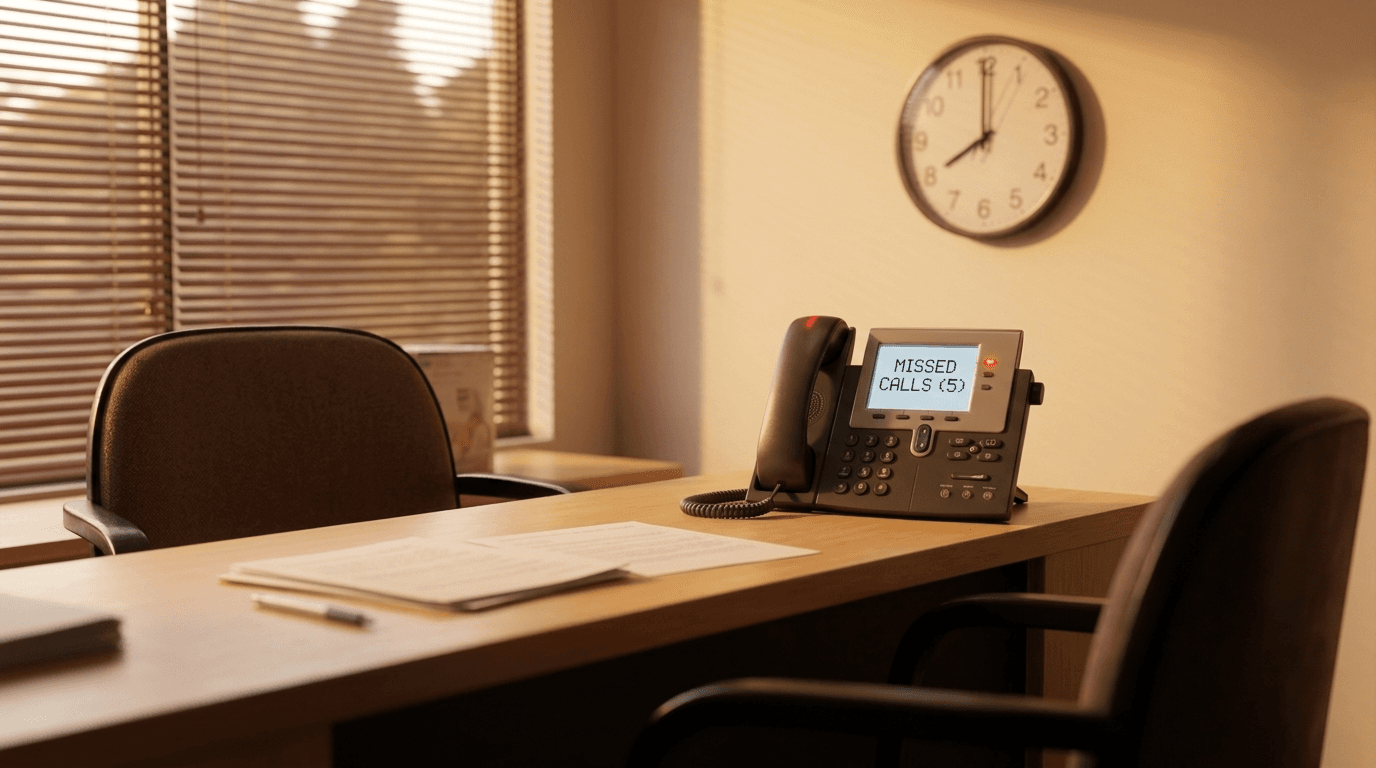
Here's a problem money alone won't fix: in 2026, the person you need to hire often isn't there to be hired.
The skilled trades don't read like a labor market anymore — they read like a slow evacuation. In a recent stretch, employers posted roughly 600,000 jobs across the major trades — electricians, plumbers, HVAC techs — while only about 150,000 new workers came up through the apprenticeship pipeline to fill them. Four seats open for every one person walking in the door. Analysts project that by 2030, some 2.1 million skilled-trades positions could go unfilled, with as much as $1 trillion a year in lost economic output. On the ground it's plainer still: by recent counts, 77% of contractors say they can't fill their open roles, and more than two-thirds of technicians are now over 45.
Now sit with the obvious question. If you can't find a licensed technician — the trained, irreplaceable person who does the actual work — what are the odds you'll find, train, and keep the person who answers the phone?
The chair nobody stays in
Say you beat the odds and hire a receptionist. The trouble is only beginning.
- The median receptionist earns about $34,000–$37,000 a year — and roughly one in three leaves within twelve months.
- Replacing a clerical hire costs 50–80% of their annual salary once you count the posting, interviews, background check, and 40–80 hours of training.
- Specialty front-office roles now take 45–60 days to fill. That's two months of a ringing phone while you interview.
And the phone doesn't wait for your hiring timeline. It rings during the interviews, during the two weeks' notice, on the sick day, on the car-broke-down day, and every evening after five when the desk is empty by design. Home-service businesses already miss around 27% of inbound calls — better than one in four — and each missed call carries roughly $1,200 in lost work. You can't out-hire that in this labor market. You can't even come close.
This isn't a cost play — it's a staffing one
Most pitches for an AI receptionist lead with price. That's the wrong frame. The real point is simpler: the machine shows up.
It doesn't give notice, doesn't leave for a raise across town, doesn't call in sick, and doesn't need a 45-day search to replace. It answers on the first ring at 11 at night and 11 on a Sunday, in a warm, unhurried voice — gets the name, the problem, and the address, answers the ordinary questions, and books the job onto your calendar. Every time, whether or not you ever fill that front chair.
And it isn't you versus your team. The strongest setup is a warm handoff: the agent catches every call, handles the routine ones start to finish, and routes the genuine emergencies straight to a human who can help. Behind that single calm voice is actually a team of specialized agents — one triages, one books, one texts the confirmation — so nothing waits on a person who isn't there.
You're not being asked to replace people you can't do without. You're being offered a way to stop losing a quarter of your revenue to a seat the whole economy can no longer keep filled.
The workforce that used to answer the phone has largely moved on. Stop waiting for it to come back — and let something that actually shows up in the morning carry the load.
Curious what your unanswered calls are worth? Get a free demo — our AI will call you and run a live intake so you can hear exactly what your next caller would.
Sources: U.S. skilled-trades labor and apprenticeship data; industry receptionist turnover and cost-of-vacancy benchmarks; home-services missed-call research. Figures are industry benchmarks, not guarantees of individual results.